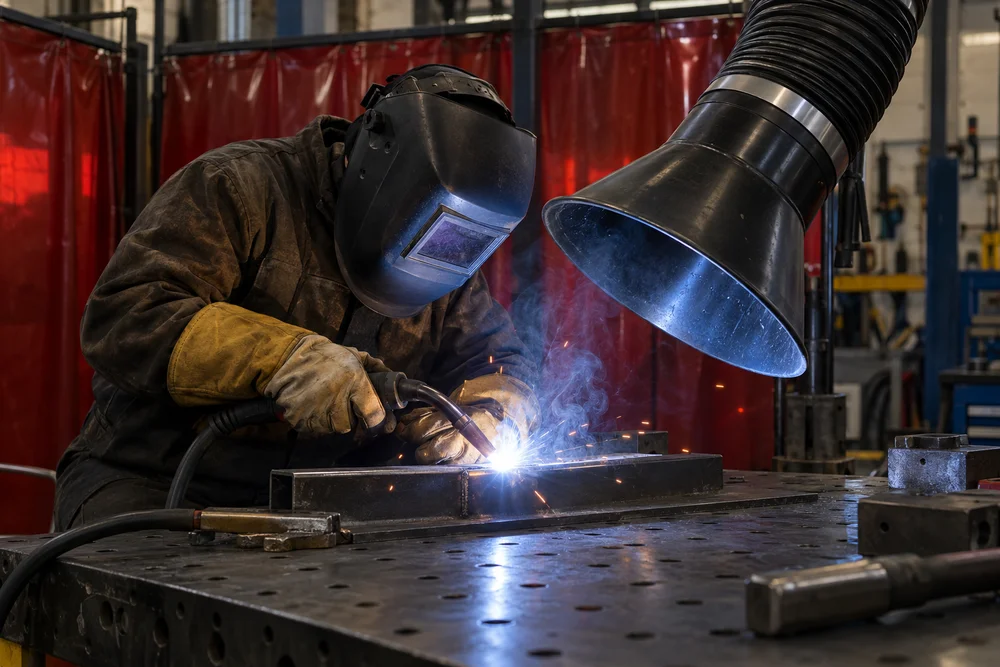
Welding As Part Of A Defined Job
Steel welding joins prepared components into an assembly or restores a component where repair is suitable. Enquiries may concern frames, brackets, supports or damaged fabricated items. Describe the material, thickness, joint arrangement and service conditions so the work can be assessed before a process is selected.
A photograph of a crack is a starting point, not a repair specification. The reason for failure matters. Repeated loading, corrosion, poor support or an unsuitable connection can cause a repaired item to fail again unless the underlying problem is understood and addressed.
Workshop Work And Site Access
Workshop welding can offer better control of preparation, positioning and fume capture. Site work introduces access, weather, neighbouring activities and fire risks. Tell us whether the component can be removed and whether it is attached to a building, machine or other equipment that needs isolation.
Site welding availability and suitability must be confirmed for the individual job. A hot-work permit may be needed under the premises rules. Access restrictions, combustible materials and the arrangements for fire watch should be discussed with the person controlling the site before any work is planned.
Preparation And Inspection
Good weld preparation starts with identifying the parent material and removing unsuitable coatings or contamination from the joint area using a safe method. Fit-up, edge preparation and access affect the ability to produce the specified joint. Existing paint or galvanizing can introduce additional health and quality concerns.
The required inspection depends on the duty of the weld and the project specification. Visual checks may be part of the process, with other testing required for particular joints. Agree acceptance criteria and any records before work begins so inspection is planned rather than added after completion.
Welding Qualifications And Procedures
BS EN ISO 9606-1 concerns qualification testing of welders for steels, while BS EN ISO 15614-1 addresses welding procedure testing. The procedure and the individual qualification answer different questions. Check that their documented scope matches the proposed material, process, thickness and joint.
Do not assume that a neat weld surface proves suitability for a critical load. Agree acceptance criteria and any required non-destructive testing with the responsible designer before the work begins. For an existing crack, assess the cause before choosing a repair method.
Fume Control And Structural Requirements
HSE guidance identifies welding fume as a health risk and requires suitable exposure controls under COSHH. Indoor work typically needs source capture, with respiratory protection where the assessment requires it. Outdoor work also needs an assessment of respiratory protection because natural ventilation alone is not a complete control plan.
For load-bearing building components, establish the applicable BS EN 1090 execution requirements and the required welding procedures and competence. Do not assume that experience with general repair welding demonstrates suitability for every structural joint. The specification and the proposed supplier’s supporting records should be checked together.
A Clear Process From Brief To Handover
Start with the intended use and a drawing that identifies the current revision. Include quantities, the project postcode and a realistic description of the access route. If dimensions are provisional, mark them clearly so they are not mistaken for instructions ready for manufacture.
Agree who provides the design and who checks site measurements. Material grade, finish, fixing positions and critical dimensions need to be settled before the job is released. A change to one component may also affect another supplier, so communicate revisions to everyone who uses the information.
Fabrication should follow the approved detail, with the inspection requirements planned into the job. Agree whether a first-off component, trial assembly or dimensional record is needed. It is easier to check a critical feature before finishing than to discover a mismatch at delivery.
Confirm packaging, identification and unloading arrangements before despatch. The person receiving the goods should be able to match each component to the drawing or order. Installation, lifting and any temporary works need their own agreed responsibilities and method.
What Affects Cost And Programme
Material, quantity and manufacturing complexity all influence the quotation. Cutting, drilling, forming and joining can involve setup work that is similar for a single part and a small batch. Tell us whether more parts may be needed later, without assuming a future order will carry the same price.
Protective finishes, inspection records and delivery can add separate stages. Ask what is included in the written scope and compare quotations against the same drawing revision. Engineering, site measurement, lifting and installation should be listed explicitly when they form part of the order.
The programme depends on approved information, available material, manufacturing capacity and any finishing process. Provide your required site date early and discuss whether a staged delivery is useful. Changes after approval can affect both workshop work and the delivery plan.
For work that interfaces with another component, identify which dimensions control fit and how those dimensions will be verified. A tolerance should be related to function rather than copied across every feature. Agree any proposed change before it reaches production.
Questions, Answered
Can Damaged Steel Be Welded Rather Than Replaced?
Damaged steel may be suitable for welding after the material, failure cause and structural duty have been assessed. A crack should not simply be covered with a fresh weld. Supply photographs and explain how the item is used. Safety-critical repairs may require a designer’s assessment before the repair method is agreed.
What Does Coded Welding Mean?
Coded welding usually refers to a welder qualified within a particular test standard and range. It is not a universal approval for every material, thickness, process or position. Ask which qualification applies, whether it is valid for the proposed joint and what welding procedure and inspection requirements the project specification calls for.