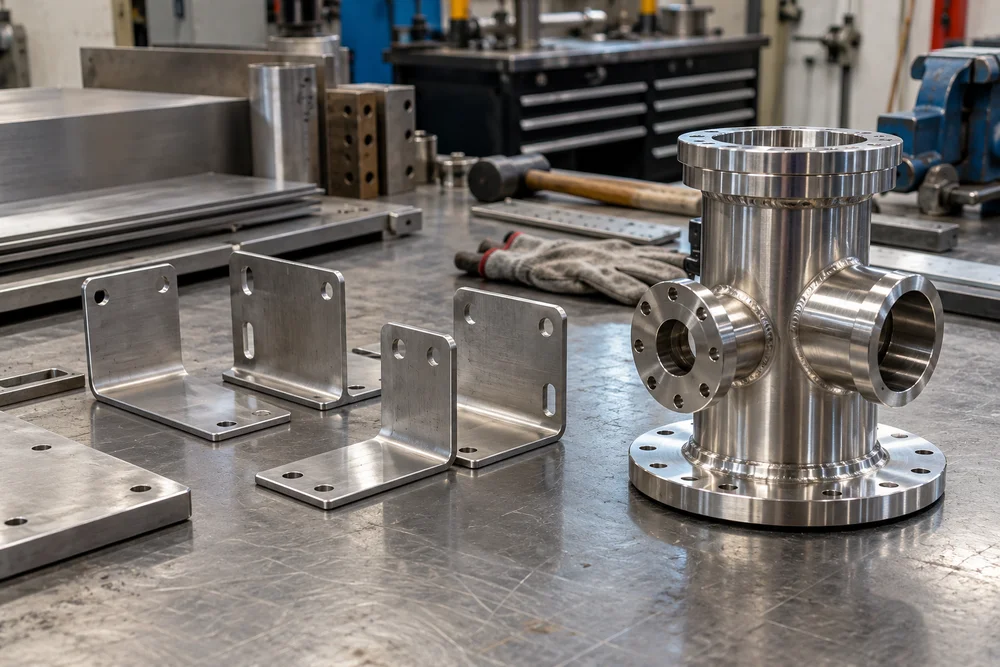
From Component To Finished Assembly
Metal fabrication combines cutting, forming, drilling, joining and finishing to create a usable part. A simple bracket might need only a drawing and material call-out. A larger frame can need a coordinated assembly drawing, connection details and a defined inspection plan before production starts.
We welcome enquiries for steel frames, support brackets, equipment bases, protective covers and repeat components. Describe what the item does, what it connects to and the conditions it faces. Those details help establish whether the proposed material and construction suit the application.
Choose The Material For The Job
Mild steel, stainless steel and aluminium have different corrosion behaviour, joining requirements and finishing options. Specify the grade where it is already known. If you need material advice, explain exposure to moisture, cleaning chemicals, heat and contact with other metals rather than asking for a generic rustproof product.
A decorative finish does not replace a material specification. Stainless assemblies need consideration of contamination during manufacture and the treatment of finished welds. Aluminium parts can require a different design approach from an apparently similar steel component, particularly around stiffness and welded connections.
Dimensions, Tolerances And Repeat Parts
Give dimensions from consistent reference points and identify the surfaces that control fit. Hole centres, fixing slots and mating faces often matter more than the outside size. Where a part must fit existing equipment, supply a dimensioned drawing and explain how those measurements were taken.
For repeat orders, agree a sample or first-off inspection before releasing the batch. Drawing revisions should be identifiable so an old file cannot be mistaken for current instructions. Label handed components clearly and state the quantity of each version, particularly where parts look almost identical.
Safety And The Intended Use
The intended use determines the checks needed. A load-bearing building component may bring BS EN 1090 requirements into scope, while an enclosure or decorative bracket needs a different assessment. Describe the function honestly so certification requirements can be established before a supplier is chosen.
Machine guards also need competent assessment of the hazards, clearances and access arrangements. Fabricating a cover does not establish that a machine is safe to use. Workplace equipment duties under PUWER and welding-fume controls under COSHH should be addressed by those responsible for the work and equipment.
A Clear Process From Brief To Handover
Start with the intended use and a drawing that identifies the current revision. Include quantities, the project postcode and a realistic description of the access route. If dimensions are provisional, mark them clearly so they are not mistaken for instructions ready for manufacture.
Agree who provides the design and who checks site measurements. Material grade, finish, fixing positions and critical dimensions need to be settled before the job is released. A change to one component may also affect another supplier, so communicate revisions to everyone who uses the information.
Fabrication should follow the approved detail, with the inspection requirements planned into the job. Agree whether a first-off component, trial assembly or dimensional record is needed. It is easier to check a critical feature before finishing than to discover a mismatch at delivery.
Confirm packaging, identification and unloading arrangements before despatch. The person receiving the goods should be able to match each component to the drawing or order. Installation, lifting and any temporary works need their own agreed responsibilities and method.
What Affects Cost And Programme
Material, quantity and manufacturing complexity all influence the quotation. Cutting, drilling, forming and joining can involve setup work that is similar for a single part and a small batch. Tell us whether more parts may be needed later, without assuming a future order will carry the same price.
Protective finishes, inspection records and delivery can add separate stages. Ask what is included in the written scope and compare quotations against the same drawing revision. Engineering, site measurement, lifting and installation should be listed explicitly when they form part of the order.
The programme depends on approved information, available material, manufacturing capacity and any finishing process. Provide your required site date early and discuss whether a staged delivery is useful. Changes after approval can affect both workshop work and the delivery plan.
For work that interfaces with another component, identify which dimensions control fit and how those dimensions will be verified. A tolerance should be related to function rather than copied across every feature. Agree any proposed change before it reaches production.
Questions, Answered
Can I Request A Single Component?
A single component can be assessed alongside larger fabrication enquiries. State whether you need one part, a prototype or an initial item before a repeat batch. Set-up, material availability and finishing can influence whether the job is practical. Include the same dimensional and material information you would supply for a larger order.
Can You Include A Protective Finish?
A protective finish can be included in the enquiry scope once exposure and appearance are understood. Primer, galvanizing, powder coating and fire protection have different purposes and preparation requirements. State the required system if specified. Agree whether finishing, transport protection and any touch-up after installation are included in the quotation.